Thursday, May 19, 2011

The paranoid parents with sleeping babies - First Thoughts

Have you ever been to someone's house and were asked to be very quiet because a baby is sleeping? You don't understand why it's such a big deal; the baby is in a room behind closed doors; how much noise is too much noise? You end up awkwardly in a room full of people staring at each other paranoid that you would be accused for waking the baby up.

The truth is there's nothing more desirable for a parent than when a child has a good nap/sleep. Without enough sleep, babies are cranky, fussy (not fuzzy), and throws tantrum fits. Baby nap time is also a time when parents can relax. How do parents relax when they can't make noise in the house themselves? How do parents host others in this situation?

HereTryThis: Sound "loudness" can be picked up by a common device called a decibel (DB) meter. It's typically known to be used by traffic police to measure noise of illegal automotive exhaust systems. Imagine having sensors placed inside a baby's room and a remote reader/indicator that parents can carry with them (or displayed on the screens of their smart phone, laptop, Apple products, or computer). When babies are woken up by loudness of noise, the program can record the point of occurrence or the DB level that lead up to the baby's awakening. Once that threshold is set, the reader/indicator will warn people when their DB level is reaching the levels that may "potentially" wake up the sleeping babies.

Go ahead and watch your favorite TV show, listen to that music, or chat away with your friends. Just keep an eye on that meter to not go over your DB limit!


Tuesday, May 17, 2011

The passion of sharing and mentoring

I get up each and every morning, motivated by the fact that today I have another opportunity to share with others the lessons I've learned throughout my life experiences. My current goal in life is to be the catalyst to help those with great ideas blossom and achieve their own personal goals.

Having taught a college class on "how to start your own small business," I've had the pleasure of interacting with many young and bright individuals that just can't wait to tell the rest of the world their "master plan." I can see the passion in the eyes and hear in their speech of those who really want to make a difference. I truly believed that every one of my students could be successful in achieving their set goals, but without proper guidance and mentoring, it is easy to get lost or even worse give up.

The key in being successful in anything, I've always advocated, is to understand and continually evaluate the driving force behind your desire to achieving your end goal. Many times people confuse the driver with the end goal. An example of such would be "I want to be famous and rich." That is an example of an end goal, but is not the true driving factor behind what you do. People, especially young individuals, focus on the big money, becoming the next google or facebook buy-out,  and they forget the true reason behind what they do. Unknowingly the carriage gets put in front of the horse, and all of a sudden everything comes to a halt. This is not saying people should not think backwards, rather once a going forward plan is established, the motivation for keeping the wheels turning is the "why" behind what you do. The planning can and will always change (this is called life), but the driving factor shall not change.

When friends, family, peers, past students, and acquaintances would approach me with "great ideas" they want to discuss with me privately, I've always entertained every request and have kept my promise for confidentiality. We would do a simple exercise on how to evaluate your ideas first to screen out any low potentials followed by asking the individual "why do you want to do this?" Responses that are derivatives of "benefit-to-self" or worse yet lack of response typically means trouble down the road.

People should constantly remind themselves of "why" they do what they do, and sometimes it takes an outsiders or mentors to do the actual reminding.

Here Try This: Help a friend who may be stuck or struggling with achieving his/her goal by asking the question "what is the driving factor behind what you want to achieve?" Do not probe, agree, or disagree with the responses; simply listen. A simple question like this one can help rejuvenate the individual and help him/her refocus on the motive behind the action.

Backwards Thinking or Thinking Backwards

Ever get stuck on how to figure out something? Ever feel lost in mid-pursuit? Whether you're thinking of the next big business idea, planning an event, or trying to find new ways to grow your career, try thinking backwards.

Here Try This: Feelings of aimlessness or lost typically comes from not having a well defined goal. Let's take a lesson from "Alice's Adventures in Wonderland" by Dodgson:


Alice: Would you tell me, please, which way I ought to go from here?
The Cheshire Cat: That depends a good deal on where you want to get to
Alice: I don't much care where.
The Cheshire Cat: Then it doesn't much matter which way you go.


Everything starts with knowing where you want to be or what you want to achieve in the end. If you're stuck on something, ask yourself "what is the ideal end result of what I'm doing?" You would then follow-up with repeatedly asking yourself "in order to get to my ideal end result, what do I have to do to achieve it?"

Let's say, for example, you have your heart set on becoming a concert pianist. The next question would be, in order to become a concert pianist, what do I have to do to achieve it? Your response may be "I'll need to understand how to book my own concert, I'll need to be competent in public performance, etc." Then you'll ask, in order to book my own concert, "I'll need to find an agent who understands availability of venues and can get a big crowd to attend," and to perform competently in public "I'll need to find out how much time other concert pianist commit to practicing each day and with what aids (tutors, mentors, equipments)." Your repeated questioning will eventually leave you with a shopping list of things which can be represented by a tree-diagram.

Laying out your thoughts backwards from the end goal allows you to have a sturdy going-forward plan to walk on. It may be overwhelming to realize there's actually a lot of things you now have to do that you didn't think you had before. Next comes prioritization, organization, and execution; topics for another day.

Monday, May 16, 2011

How to evaluate your ideas

It is exciting to think of ideas for a new business opportunity; that's the beginning of a journey for any entrepreneurs. When you discover a niche or a new way of doing things, something's telling you that you're on the right track. Ideas alone, however, isn't enough to get you where you want. There are several key questions you need to answer prior to taking your ideas to investors.

Here Try This:
1) Does this idea already exist
Sometimes it is hard to believe that just because you've never seen or heard of your new idea elsewhere before, it must not exist. Thanks to technologies today, the first thing you can do is go on the internet with your favorite browser and do a simple query. Two major information repositories that I find useful but often neglected during research are enthusiast forums and conventions websites. People talk and share online, and many good ideas are often discussed inside enthusiast forums. Depending on your idea, search around for enthusiast forums that target your audience, and sometimes you don't have to register in order to use the forum's search function. Conventions websites are based on industries and topics. If your idea is related to the automotive industry, you may be looking at the SEMA website or if your idea is related to social networking there's Web 2.0 Expo, etc. Many times pioneering ideas are being discussed at these conventions, and subject of interests would most often be posted in the form of an agenda on these websites. Physically attending these conventions (if possible) and meeting people with similar interest may help you evaluate your idea(s).

2) Who are your existing competitors / partners
If your idea doesn't exist yet, good for you; it doesn't mean somebody else isn't cooking up the same idea as you at this moment in time. On the flip side don't be heart broken just because your idea(s) is already out there. Do further analysis to see where your idea stands in the market space. Something that's hard to understand for most people is that the existence of competition may actually be good for you. In a sense the competition already cracked open the market, and data about price point, customer feedback, and marketing campaign can all be analyzed to help you address question 3 (below). A good example is fast food restaurants. When you see a fast food restaurant (ex: McD), what is almost always guaranteed to be across the street from it? Another fast food restaurant. In some cases competition may actually turn into partnership. An example of this is FB and Google allowing anybody to use their API to build web content, apps, etc. Plan ahead and figure out who may be your potential allies in the near future.

3) What is your value proposition / market differentiators
Now that you know what's out there, bring yourself back and ask: "how is your idea(s) any different?" Another way of asking this questions is "why would someone pay for your product/service over the other guy?" In order to win over your customer, you must provide one or several of the following benefits: Saves time, saves effort, prestigious or boost ego, makes them happy, reduce risk or increase safety, and lastly saves money.

4) Target audience and market potential
Knowing your target audience is important because it determines your market potential. What demographics are you targeting (children, adults, retired, male/female, etc) and what geographic location(s)? Is your audience going to purchase your product/service physically or over the internet? Calculating your market potential allows you to visualize and understand how to structure price point, provide customer support, and best advertise yourself.

If you've made it this far, you're doing pretty well. There are other topics such as resource planning, expansion model, financial structure, etc that will require additional brain power.

Hopefully you've documented all of the above in neat and organized manner because you would have written a majority of a business plan (which you will need to entice your investors). Good luck.

Wednesday, May 11, 2011

Car Dealership Badging - First Thoughts

While driving this morning, I've noticed (like many times before) that many cars on the road wears dealership badging (POWER Ford, Jim Click Toyota, etc) in the form of license plate frame, vinyl stickers, or embossed plastic lettering. In my honest opinion they all look like crap (mis-matched fonts with OEM badging, odd colors, put on crooked), BUT it's free advertising for dealerships and most people keep them on anyways because of the trouble of taking them off.
 
Here Try This: Since most dealerships already have the practice of putting some sort of badging on every vehicle they sell, why not help them come up with badging that will provide a seamless integration with the rest of the OEM badging? They could even brand their logo/name and enhance the look of a vehicle! Put together a team of graphic designers, find a few small production proto-type houses in the US, negotiate some deals with a few dealerships to try out the idea, and if the wind picks up the sails, expand production to low-cost countries (keep design in-house), employ a nation wide sales team, and sell sell sell. We would push new items to our customers along with the schedule of when new car models are released in the market. Make a $1 profit each new car sold with 5.5M cars/trucks/SUV sold April '11 YTD, that's $5.5M in your wallet.

Monday, May 9, 2011

Roaming Automotive Service Team - First Thoughts

Ever looked down at your odometer and been reminded you're way past due for an oil change? Ever try to tune out the squealing brake sound so you can postpone getting that brake pad changed? Ever turn on the wipers and been reminded how crappy your windshield wipers are in the rain and wish you had swapped them out before raining season?

For people that can't (or choose not to) do the work themselves and don't have time to bring the vehicle to a service station (dealership, jiffy-lube, midas, etc)....

Here Try This: A roaming (traveling) Automotive Service Team can be scheduled online, arrive at your doorstep, and take care of your vehicle as requested. This idea is not new. Think of construction workers, plumber, handy-man that you call to your home when something needs to be done. The roaming auto service is no different. The experts bring the tools, the material (or use your material), get the job done while you spend time doing other value added things.

Sunday, May 8, 2011

Lucrative Autoparts e-Commerce - First Thoughts

If you're like me, a gearhead, you probably change your own oil, check your tire pressure, top off your own fluids, change brake pads and rotors, and maybe even attempt to do your own timing belt. Let's face it, dealership now-a-days don't make much money off of selling brand new cars. In fact most of their profits come from selling used cars and servicing cars. There's so much money in the "servicing car" business, that's why you see Midas/JiffyLube/Autozone/Big-o-Tires/etc almost every other corner of the street. Even Costco, Sam's Club, and Sears participate in consuming this pie. From this observation I can argue that there is a niche; people like myself don't goto those places to get work done because of many reasons; I don't trust other people with my own car, I almost always prefer OEM parts and not aftermarket, and I hate to pay someone for something I can do competently. I would almost always purchase my parts online or thru a dealership's parts department; there's a lot of money spent in the market that serves people like me I'll bet.

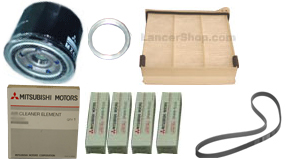
Here Try This: Create an e-commerce website that brands itself as the best and most popular store, stocked with regular maintenance parts for all major models. Focus the product range on wear and tear parts that are most frequently consumed (oil, filters, anti-freeze, brake pads, rotors, tires, spark plugs, in-cabin air filter) and maybe even venture into small items (wipers, bulbs, fuses, car care items "think wax on, wax off"). Setup consumer schedule unique to each car owner's car usage and offer to deliver items (such as oil and filter) quarterly or semi-annually. Forget about selling major items (alternators, clutchs, torque converter, transmission, exhaust, suspension, etc). Brand this company with a simple mission - your source for most common car maintenance products.